
How long does it actually take to charge an EV at home
The maths is boring but useful. Real charging times for real cars on real Perth home setups.
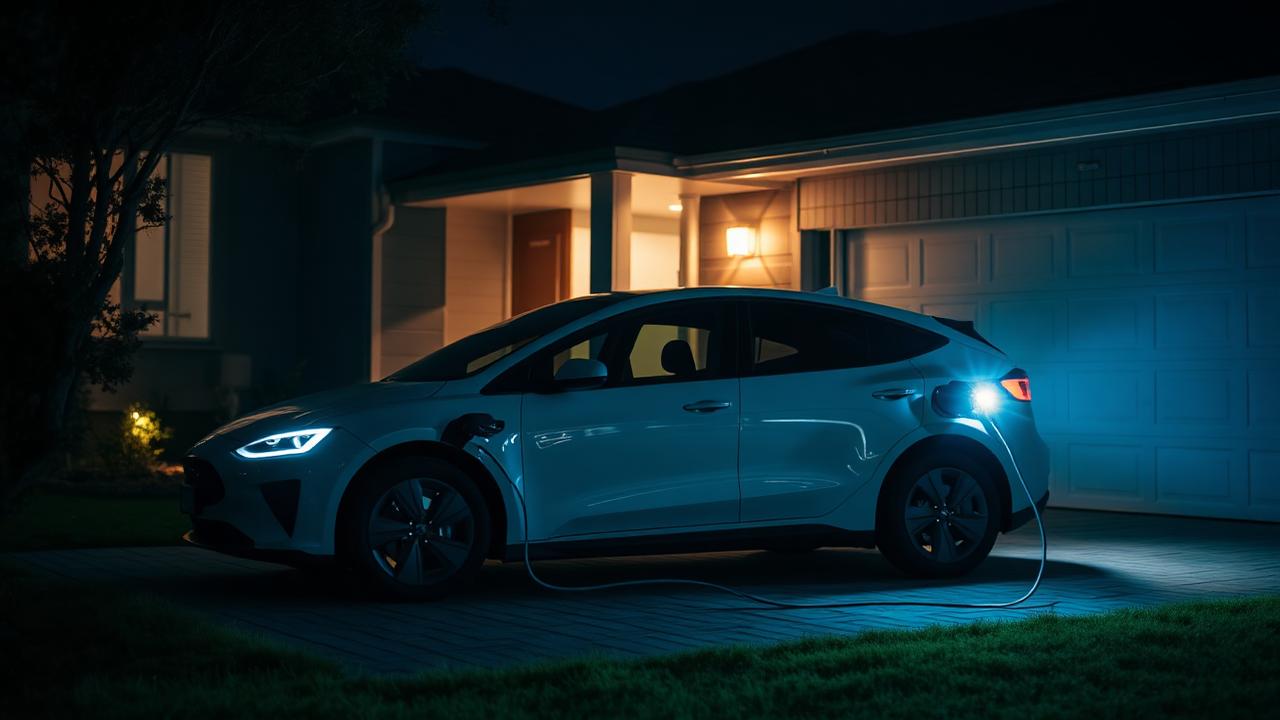
The formula for charging time is simple, but the number that pops out of it is only useful once you understand what you actually do every day.
The basic maths
Time to charge (hours) equals kilowatt hours needed, divided by the charger's kilowatt rating. A Tesla Model Y with a 60 kilowatt hour usable battery, going from 20 percent to 80 percent, needs 36 kilowatt hours. On a 7.4kW home charger, that is about 5 hours. On a 2.4kW granny cable, it is 15 hours.
Real world numbers for common Perth EVs
Tesla Model Y (Standard Range) 20 to 80 percent: 4 to 5 hours on 7kW, 1.5 hours on 22kW.
Tesla Model 3 (Long Range) 20 to 80 percent: 5 to 6 hours on 7kW, 2 hours on 22kW.
BYD Atto 3 20 to 80 percent: 5 hours on 7kW. Note the Atto 3 caps at 7kW AC, so a 22kW wall unit does not add speed.
Kia EV6 (Long Range) 20 to 80 percent: 5.5 hours on 7kW, 2 hours on 11kW (the EV6's AC max).
MG4 20 to 80 percent: 4.5 hours on 7kW.
The daily reality
Nobody goes 20 to 80 percent every night. Real Perth commuting drops the battery by 10 to 20 percent per day. A 7kW home charger puts that back in one to two hours, easily inside the off peak overnight window.
You do not need a fast charger for a fast car. You need a charger that finishes before you wake up. 7kW does that for every EV on sale in Australia.
Ready to talk it through
Free site visit, fixed price quote.
Send us a couple of photos of your switchboard and where the car parks. Our team will call you back with a firm number, and answer any questions from the article.